

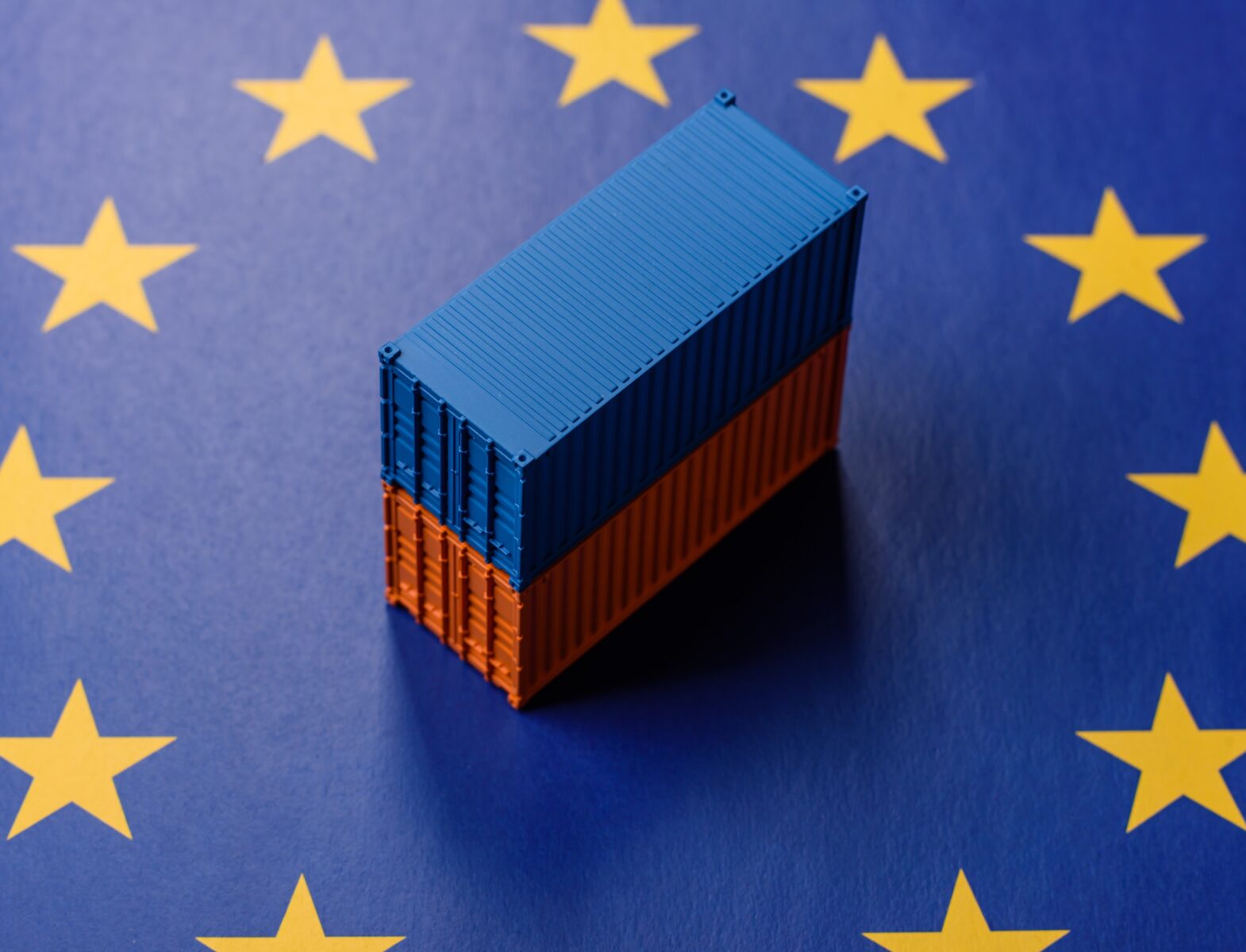


From 1 July 2026, changes are expected to affect the import of low-value goods into the European Union. These are consignments with an intrinsic value of EUR 150 or less.
The changes are particularly relevant for US and other non-EU e-commerce sellers that ship low-value goods to EU consumers, especially businesses using the Import One Stop Shop (IOSS) to collect VAT at checkout and file a single monthly VAT return.
The key operational change is the proposed removal of the long-standing EUR 150 customs duty exemption on an interim basis, together with the introduction of a flat-rate customs duty on low-value parcels. For sellers, marketplaces, logistics providers, and tax teams, this is not only a customs issue. It can affect pricing, checkout communication, landed cost calculations, product classification, VAT calculation, carrier processes, and evidence retention.
What is changing for low-value imports into the EU?
The main change is the introduction of a flat-rate customs duty for low-value parcels entering the EU.
- The EUR 150 customs duty exemption for low-value imports is being removed on an interim basis.
- A fixed customs duty of EUR 3 per item type is expected to apply to low-value parcels, based on the tariff classification line in the customs declaration.
- The EUR 3 charge may apply even where the goods would not otherwise be dutiable under normal customs rules, including where goods are zero-rated for duty or covered by a free trade agreement, such as the UK/EU FTA.
- The duty will form part of the taxable base for VAT, as with other customs duties.
- The measure is expected to remain temporary until broader EU customs reforms, currently anticipated around 2028.
The duty will not be declared through the IOSS return. It will be collected at the border or as part of the shipping process, which means businesses will need to coordinate closely with carriers, customs brokers, marketplaces, and fulfillment providers.
Does IOSS still apply?
Yes. IOSS itself remains in place.
The Import One Stop Shop continues to simplify VAT collection and payment for qualifying distance sales of goods with an intrinsic value of EUR 150 or less. Sellers, or marketplaces acting as Electronic Interfaces or deemed suppliers, can continue to collect VAT at checkout and file a single monthly return.
However, the new duty changes the cost and operational profile of IOSS shipments. Businesses should not assume that the VAT process staying the same means the end-to-end import process will remain unchanged.
Practical impacts for e-commerce sellers
- Pricing and landed cost calculations
Sellers should review pricing models for EU-bound low-value consignments. At a minimum, businesses may need to account for EUR 3 per item type. If a parcel contains multiple distinct item types with different HS codes, the charge may apply more than once.
This can be particularly material for sellers of very low-value goods, where a fixed charge can materially affect margin, customer pricing, and conversion rates. - Logistics and carrier processes
The new duty is expected to be collected at import or during the shipping process. Sellers should ask logistics providers how they intend to collect, account for, and evidence the EUR 3 levy. This should include questions on cash flow, billing, reconciliation, carrier disbursement fees, customs declarations, and the treatment of failed or returned shipments. - Clearance and HS classification accuracy
Packages with a valid IOSS number should still benefit from faster processing, but the new duty increases the importance of accurate product classification. HS classification has already been required for IOSS shipments, but the financial consequence of classification lines will become more visible.
If two items with different HS codes are included in one package, the EUR 3 levy may apply twice. This makes product master data, item-level classification, and declaration accuracy more important for both compliance and cost control.
Potential additional fees
The EU is also considering additional handling or processing fees from late 2026, potentially around EUR 2 per item type, to help fund compliance and enforcement activity connected to product safety and small parcel oversight.
Compliance actions businesses should take now
- Confirm that product classification data is accurate and available at item level.
- Update checkout and pricing processes to calculate and communicate landed costs, including duty, VAT, and any carrier or processing fees.
- Work with carriers and fulfillment partners that understand updated H7 simplified declaration requirements.
- Model the impact on low-margin and very low-value product lines.
- Confirm how duty collection will be evidenced and reconciled across carriers and marketplaces.
- Review customer communication so EU buyers understand what is included at checkout and what may be charged during delivery.
Anti-avoidance monitoring
From October 2026 onward, the European Commission has announced monthly reviews to identify whether businesses are diverting trade away from IOSS to avoid the new EUR 3 duty.
Examples of potential avoidance behavior include avoiding IOSS registration, artificially splitting parcels, undervaluing goods, or using alternative structures designed primarily to circumvent the duty.
If avoidance patterns emerge, further legislative adjustments may follow. Businesses considering alternative models should make sure any new structure has commercial substance and is properly documented.
Alternative supply chain models
Each IOSS registrant should review the commercial impact of the new duty and consider whether alternative supply chain models are appropriate. One option may be a B2B2C model, where goods are imported into an EU Member State and then sold to consumers using Union OSS for the B2C element of the supply.
This may be worth reviewing where sellers deal in extremely low-value products or goods that would otherwise not be subject to customs duty on import into the EU. However, any alternative model should be assessed carefully. The business will need to show appropriate commercial substance, clear ownership, correct VAT treatment, and a defensible operating process.
What to do now
- Adjust pricing for shipments from 1 July 2026, including shipments that must be reported on the IOSS return due by Monday, 31 August 2026 at the latest.
- Document product classification, duty calculation, carrier collection, VAT treatment, and reconciliation processes.
- Consider whether professional advice is needed for HS classification, supply chain design, or VAT and customs treatment.
- Model the financial impact for products heavily reliant on low-value direct-to-consumer shipments from outside the EU.
- Explore whether EU warehousing, adjusted sourcing, or alternative fulfillment routes could reduce friction or improve cost control.
Summary
The upcoming EU changes to low-value imports will affect more than customs duty. They may change pricing, logistics, classification, VAT calculations, checkout communication, carrier processes, and supply chain decisions for non-EU e-commerce sellers.
IOSS remains in place, but businesses using IOSS should prepare for a more controlled operating model around product classification, landed cost calculation, duty collection, evidence, and reconciliation.
For US companies selling into Europe, the priority is to understand the financial impact early, coordinate with logistics providers, and ensure the compliance workflow can support the new requirements from the first affected shipments.
Frequently Asked Questions
Is the Import One Stop Shop being removed?
No. IOSS remains in place for qualifying distance sales of goods with an intrinsic value of EUR 150 or less. Sellers and deemed supplier marketplaces can continue to collect VAT at checkout and file a single monthly IOSS return.
What is the proposed EUR 3 duty?
The EUR 3 duty is a flat-rate customs duty expected to apply per item type on low-value parcels entering the EU. It is based on the tariff classification line in the declaration.
Will the EUR 3 duty be reported on the IOSS return?
No. The duty will not be declared through the IOSS return. It is expected to be collected at the border or during the shipping process.
Why does HS classification matter more under the new rules?
The EUR 3 charge is expected to apply per item type or tariff classification line. If a parcel contains multiple items with different HS codes, the charge may apply more than once.
What should US e-commerce sellers do now?
US sellers should review pricing, product classification, checkout communication, carrier processes, and supply chain options. They should also document how duty, VAT, fees, and evidence will be managed.
Stay informed on compliance updates
Get monthly insights on regulatory changes, compliance best practices, and cross-border expansion strategies.
Enterprise insights only. No spam. Unsubscribe anytime.